


Aliyev: “Azerbaijan Is a Cultural Bridge Between Asia and Europe”
By Birol Kılıç
Observations from Vienna, 27 October 2026
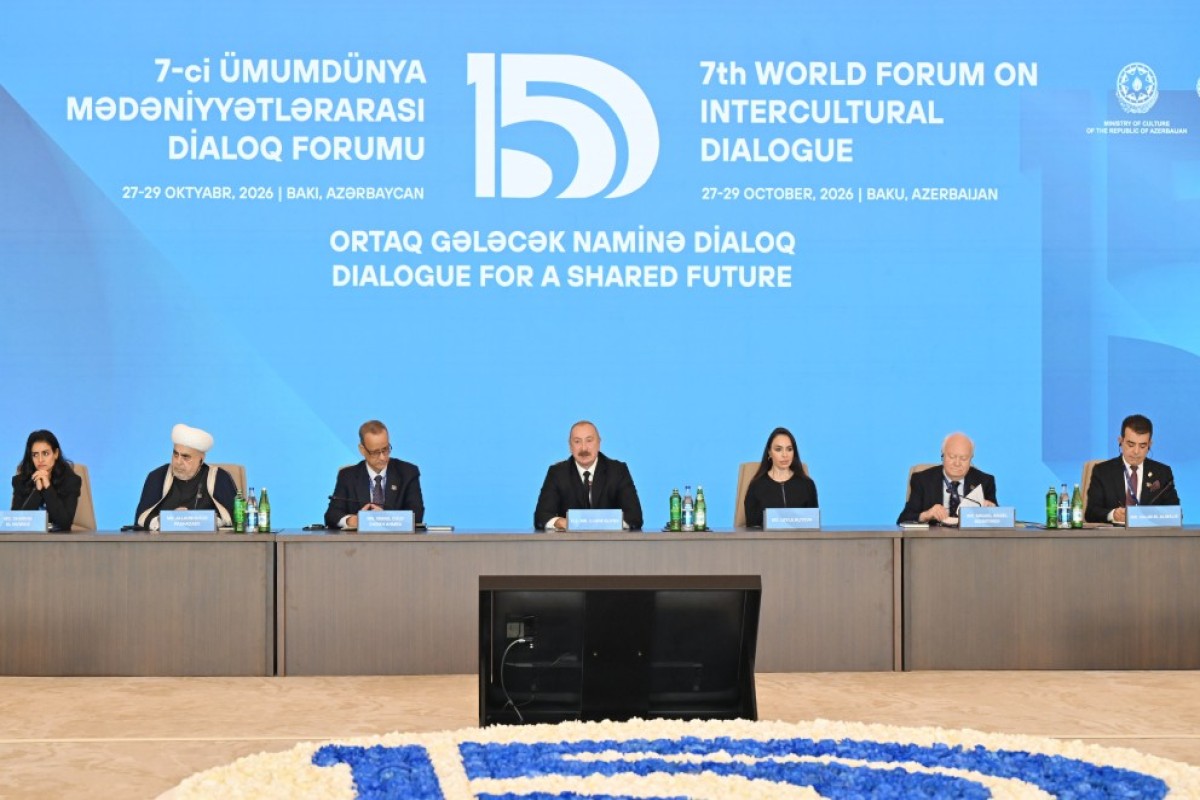
The seventh World Forum on Intercultural Dialogue opened in Baku today with a speech by President Ilham Aliyev of Azerbaijan.
Opening the forum, President Aliyev said that more than 2,000 participants had registered, including over 500 foreign guests from more than 100 countries. The figures, he said, showed that the forum had become one of the foremost platforms for intercultural relations. “The World Forum on Intercultural Dialogue has become one of the most effective and comprehensive platforms,” he said. He recalled the first forum in 2011 and thanked its partners, above all the United Nations Alliance of Civilizations, for their years of support.
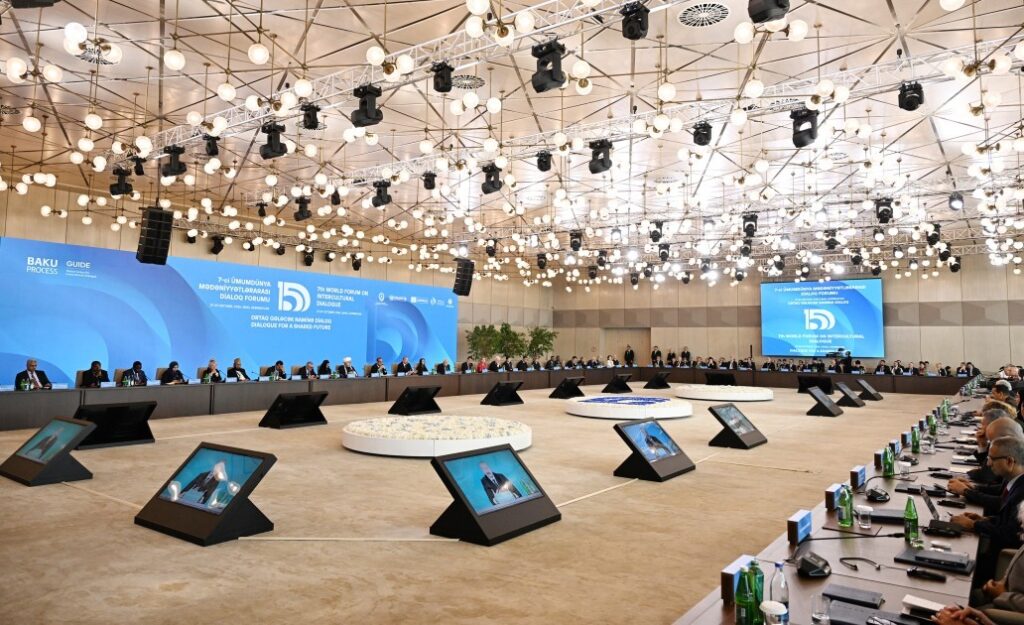
Aliyev said that intercultural and interfaith relations stood high on his country’s agenda, and summed up Azerbaijan’s place in history: “For centuries, Azerbaijan has served as a cultural bridge between Asia and Europe.” Multiculturalism and religious and ethnic tolerance, he said, were values his people had cherished for centuries. Solidarity and harmony within society, he added, were among the chief reasons for the country’s stable development.
“We did not want endless wars”
The president also dwelt on national unity. “We have a high level of solidarity, mutual respect and understanding,” he said. During the years of occupation and the Second Karabakh War, he said, people of every ethnic group and faith had stood together to defend the nation’s identity and restore its territorial integrity, and that unity had become a symbol of victory.
Turning to Armenia, he said: “We were the initiators of the peace agreement with Armenia, because we did not want endless wars.” The 2020 war and what Baku calls the 2023 “anti-terrorist operation”, he said, had brought the occupation to an end, after which Azerbaijan offered Armenia peace. The agreement was initialled last summer. Azerbaijan, he said, had taken its revenge on the battlefield; to go further would be to condemn the region to endless war.
On the wars raging elsewhere, he observed: “Starting a war is easy, but ending it is very difficult.” Azerbaijan’s experience of winning a war, stopping, and then offering peace, he argued, deserved study by those now fighting wars they do not know how to end.
An attack on double standards
In the sharpest passage of his speech, Aliyev declared: “The policy of double standards must be completely eliminated from international politics.” He noted that four UN Security Council resolutions calling for withdrawal from Azerbaijani territory had never been implemented, since no mechanism existed to enforce them. Armenia, he said, had occupied some 20 per cent of Azerbaijan’s internationally recognised territory, displaced a million Azerbaijanis and destroyed 65 mosques in Karabakh, yet had faced no sanctions.
Those who presume to tell other nations how to live, he said, should first look in the mirror. And he gave a warning: “Baseless notions that anyone can dictate anything to us will be met with our firm stance.” In 35 years of independence, he said, Azerbaijan had risen from destruction and occupation to prosperity without any international aid.
Aliyev said a wholly new situation had been created in the South Caucasus, and that the past two years had transformed the global agenda for better and for worse. He ended on a note of caution: “We must take the necessary measures to protect ourselves against any challenges that may arise.”
The Marmara Group: a fixture of the Baku Process
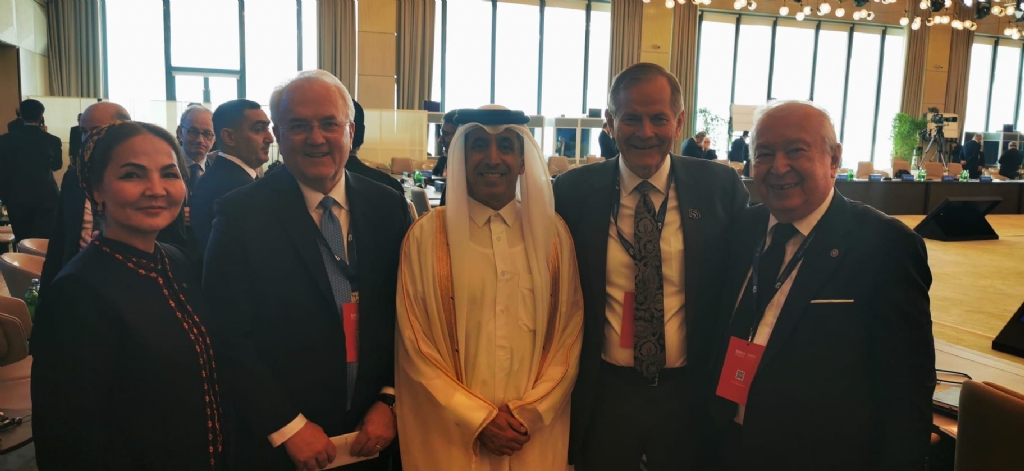
Dr Suver and the Marmara Group Foundation from Türkiye ( Istanbul) have for many years been regular participants in Baku’s international dialogue platforms. Two years ago the foundation sent a delegation led by Suver to the sixth World Forum on Intercultural Dialogue.
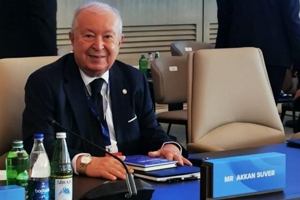
In 2012 Suver addressed the intercultural dialogue session of the second Baku International Humanitarian Forum, opened by Aliyev, where he spoke of the importance of dialogue between people of faith. The foundation also represented Turkey as a civil society organisation at the sixth Baku International Humanitarian Forum in 2018. Its work in Baku extends to the Global Baku Forum, where Suver has been among those holding up Azerbaijan’s multilingual, multi-faith and multinational society as a model for peace.
Formally the Marmara Group Strategic and Social Research Foundation, the organisation was founded in 1985 as a peace and dialogue initiative. Its best-known event, the Eurasian Economic Summit, was launched with the backing of President Süleyman Demirel of Turkey and President Heydar Aliyev of Azerbaijan. It has since grown into a gathering of heads of state and government to discuss global issues. The 29th summit was held in Istanbul in May, attended by some 300 politicians, diplomats, academics, faith leaders and business people from 48 countries.
Austrian participation
Among the participants from Austria was Dr Klaus Wölfer, a diplomat who knows Turkey well and who served as Austria’s ambassador in Ankara from 2012 to 2017. A graduate of the University of Vienna’s law faculty and the Diplomatic Academy of Vienna, he joined the Austrian Foreign Ministry in 1981. After postings in Rome, Belgrade, Budapest and Zagreb, he headed the ministry’s unit dealing with the conflicts and crises of the former Yugoslavia until 1995.
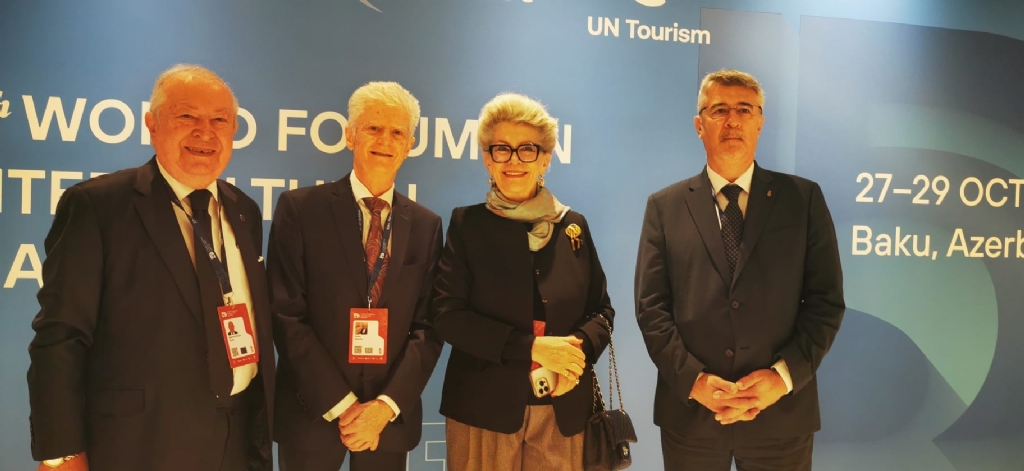
Dr Wölfer also has a distinguished record in cultural diplomacy. In 1996 he became director of the Austrian Cultural Forum in Rome, and from 2002 to 2006 he was Director General for the Arts (Kunstsektion) at the Federal Chancellery. From 2007 he served as Austria’s ambassador to Indonesia, Singapore and East Timor and as its permanent representative to ASEAN.
After Ankara he returned to Vienna to head the Foreign Ministry’s department for South-East Europe and EU Enlargement. He was also deputy political director and Special Representative for the Western Balkans. Since 2021 he has worked as a consultant, writer and moderator on international affairs, economics and ecology.
His presence reflected the interest the Baku Process attracts in European diplomatic and cultural circles. The forum comes shortly before a new round of political consultations between the Azerbaijani and Austrian foreign ministries, to be held in Baku in November.
Fifteen years of the forum
Organised by Azerbaijan’s Ministry of Culture at the Baku Convention Centre from 27 to 29 October, the forum forms part of the “Baku Process”, an initiative to promote intercultural dialogue, understanding and harmony. Mr Aliyev launched the process in 2008, and the forum has been held since 2011; 2026 marks its 15th anniversary. Its partners include UNESCO, the UN Alliance of Civilizations (UNAOC), ICESCO and UN Tourism.
What others said
The Secretary-General of the Organisation of Islamic Cooperation said the forum had become a central platform for discussing peace, security and solidarity. Azerbaijan’s Deputy Minister of Culture said its core message was the need to build bridges in a fractured world.
The three-day programme covers intercultural dialogue, peacebuilding, global security, migration, artificial intelligence and the protection of cultural heritage. Participants are also due to visit Shusha and Fuzuli.